terraForms
From the perspective of our busy lives, it is easy to mistakenly view the world as a static, unchanging place. We forget that the Earth has known more landscapes than we can imagine. The varied landscapes of Earth form, change and disappear over time. Countless landscapes have come and gone, never to be seen again. As land changes and erodes, minerals are released and carried by water. This is the beginning of a process—a work of art—that takes millions of years to complete. This process is the formation of quartz agate and crystals.
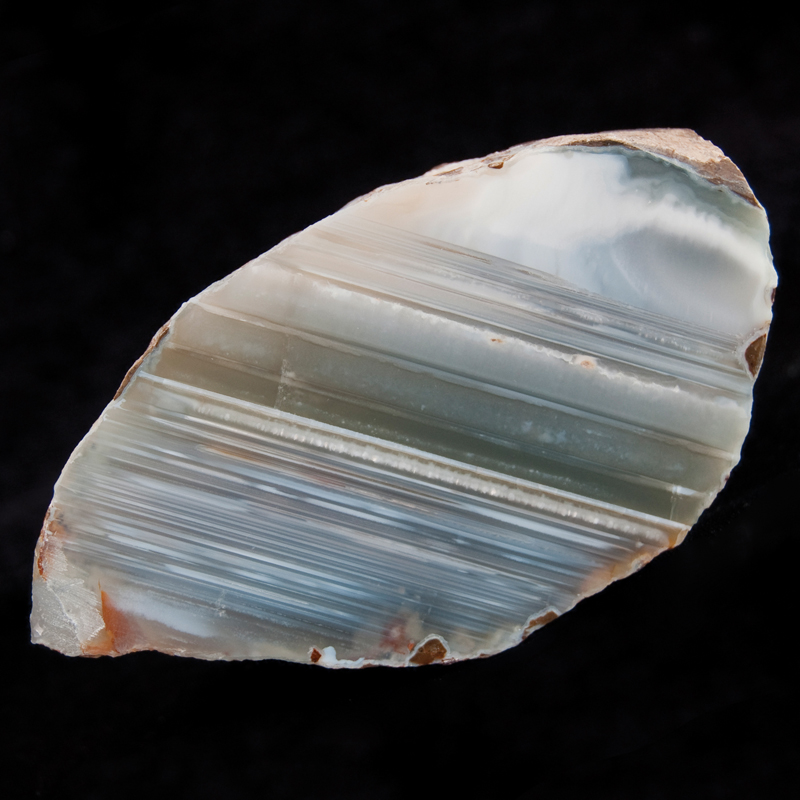
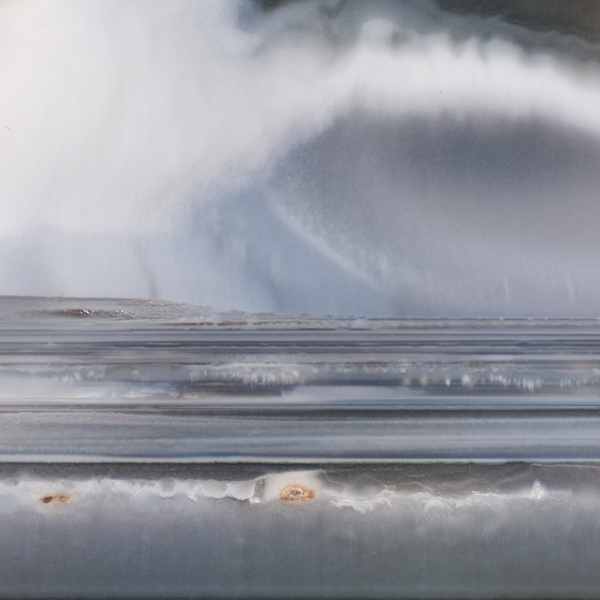
Agate nodules and geodes form as landscapes erode. They are, in a sense, transformed landscapes. Sometimes, on a very tiny scale, these agates encapsulate vast landscapes, as if they are memories of ancient Earth. Perhaps the magnificent landscapes from millions of years ago are not entirely gone, after all. These are the works of art created by Nature herself. They are self-portraits millions of years in the making.
terraForm creation
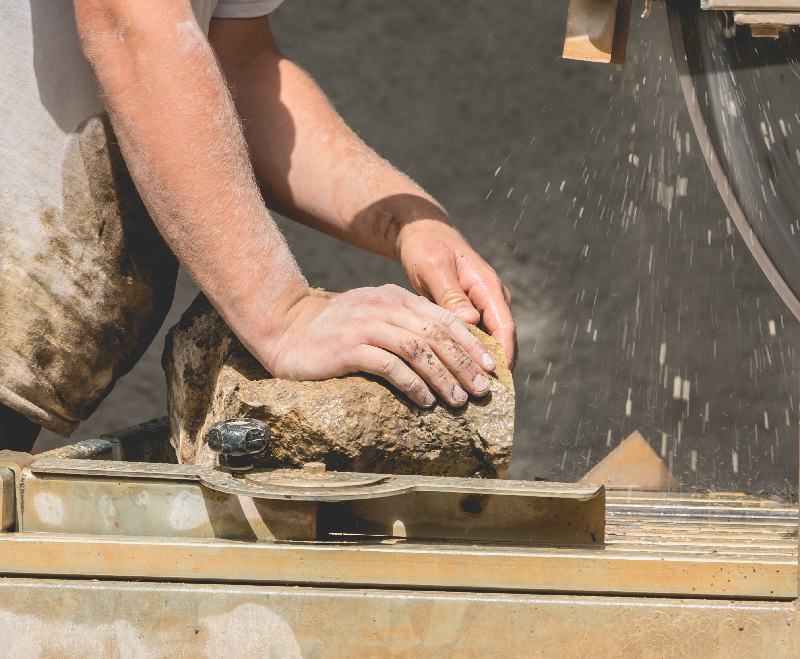
Water and colourful minerals combined with time, pressure and heat are the ingredients for geodes and nodules. Geodes and nodules are similar, but a geode has a cavity inside while a nodule is solid throughout. Waterline agate is a kind of horizontally banded microcrystalline quartz that often appears in both geodes and nodules. The landscapes that become terraForms are most often found in this waterline agate. After collection, the geodes are cut with a special diamond lapidary saw and slowly polished to have a smooth, shiny surface. Even though every geode is beautiful and in itself a work of art, very few geodes have landscapes within them. Less than 1% of the geodes and nodules collected have landscapes.
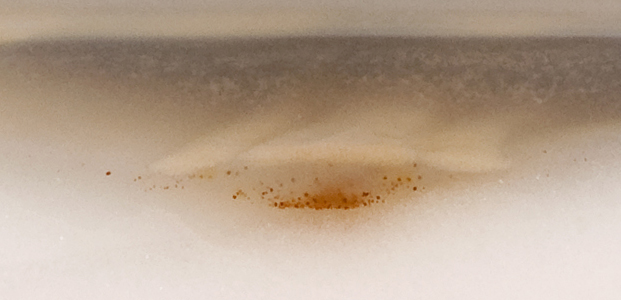
Close-up of antarctic spring, revealing that the ‘sun’ is a deposit of reddish mineral.
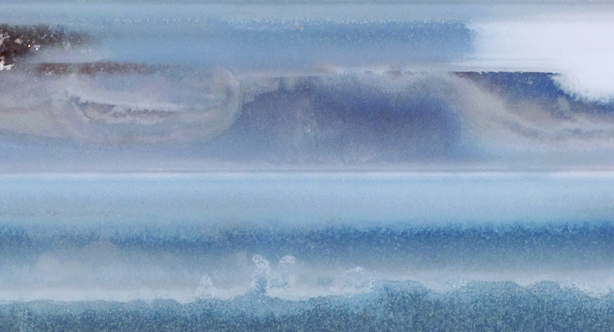
Close-up of the ‘wave’ in pacific shows minute variations in colour and texture.